
Structured goalkeeper training starts with CLEAN thinking.
CLEAN Philosophy
KEEPERHUB brings the CLEAN Method into everyday coaching practice. The platform combines a clear training structure with practical content and helps goalkeeper coaches plan game-based sessions, deliver them efficiently and develop their goalkeepers systematically.
01
Connect
Body ready. Mind focused. Actions game-realistic.
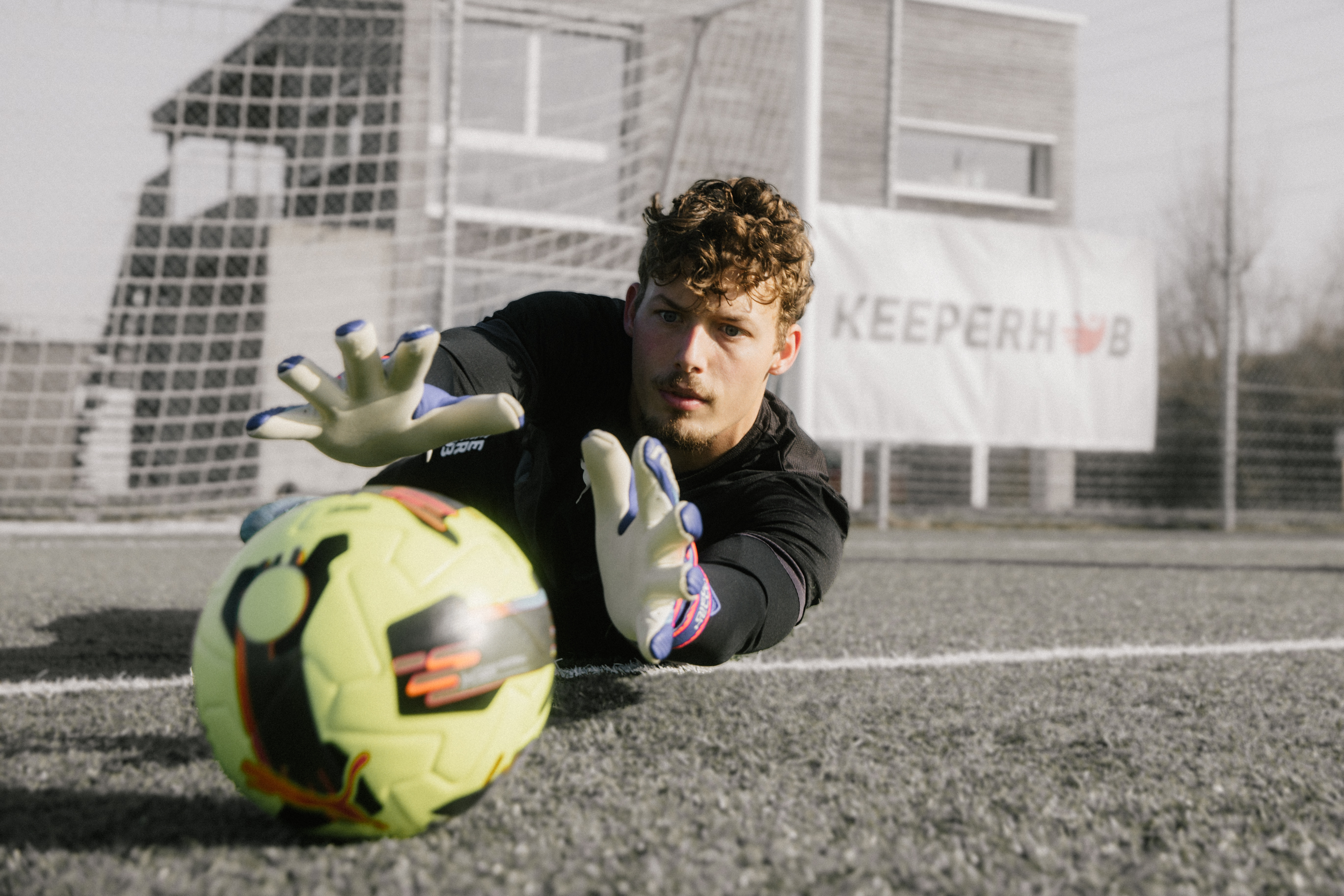
In this phase, the goalkeeper is physically activated and mentally prepared with a clear reference to the game situation. CONNECT links preparation to action and creates the foundation for the following training phases.
02
Learn
Learn, consolidate, and apply. Game-real and intentional.
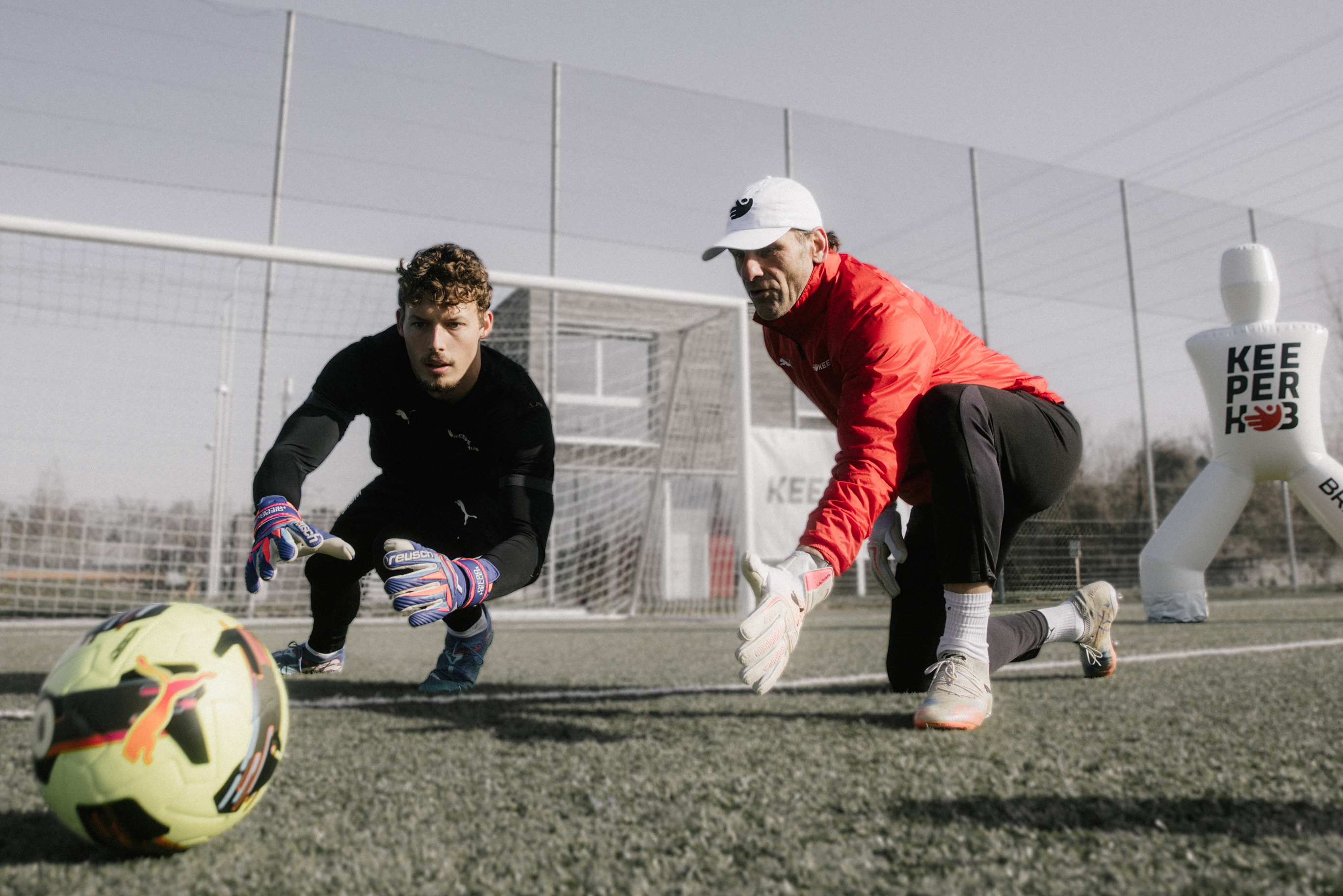
In this phase, the goalkeeper develops and stabilizes technical execution and tactical behavior within clear and controlled situations. The focus is on linking perception, decision and action. Training situations are game-real but simplified, allowing movements and decisions to be repeated and understood. LEARN builds the foundation to transfer these skills into the following phases – EVOLVE and APPLY.
03
Evolve
Create, adapt, and execute. Game-real and dynamic.
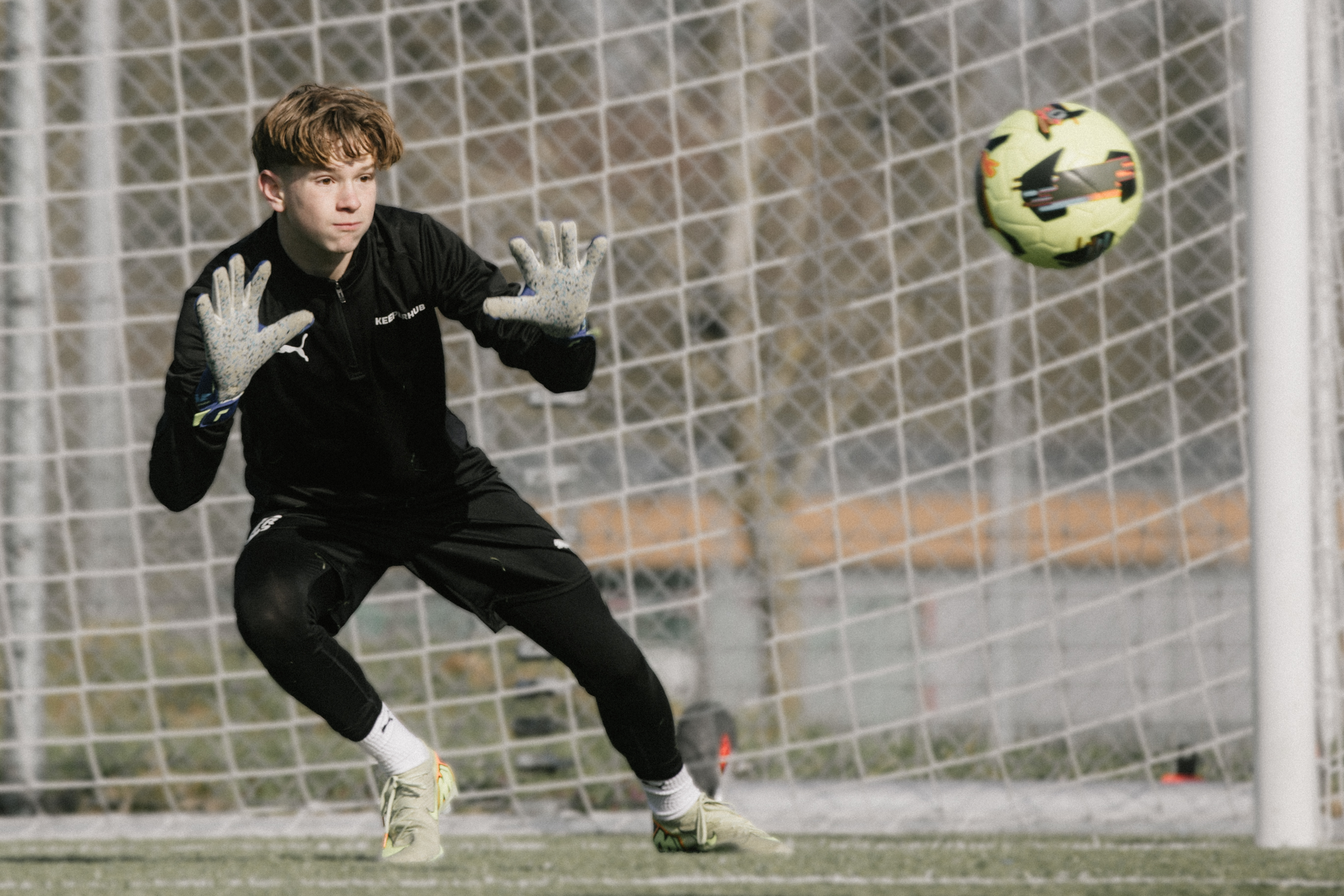
In this phase, the goalkeeper learns to make decisions under pressure and apply technique in variable, unpredictable situations. The focus is on linking perception, decision and action in dynamic game contexts. Training forms are game-real and adaptable, increasing complexity and decision-making demands. EVOLVE prepares the goalkeeper to transfer these skills into team training in the next phase – APPLY.
04
Apply
Integrate, implement, and connect. Within the team. Within the game.
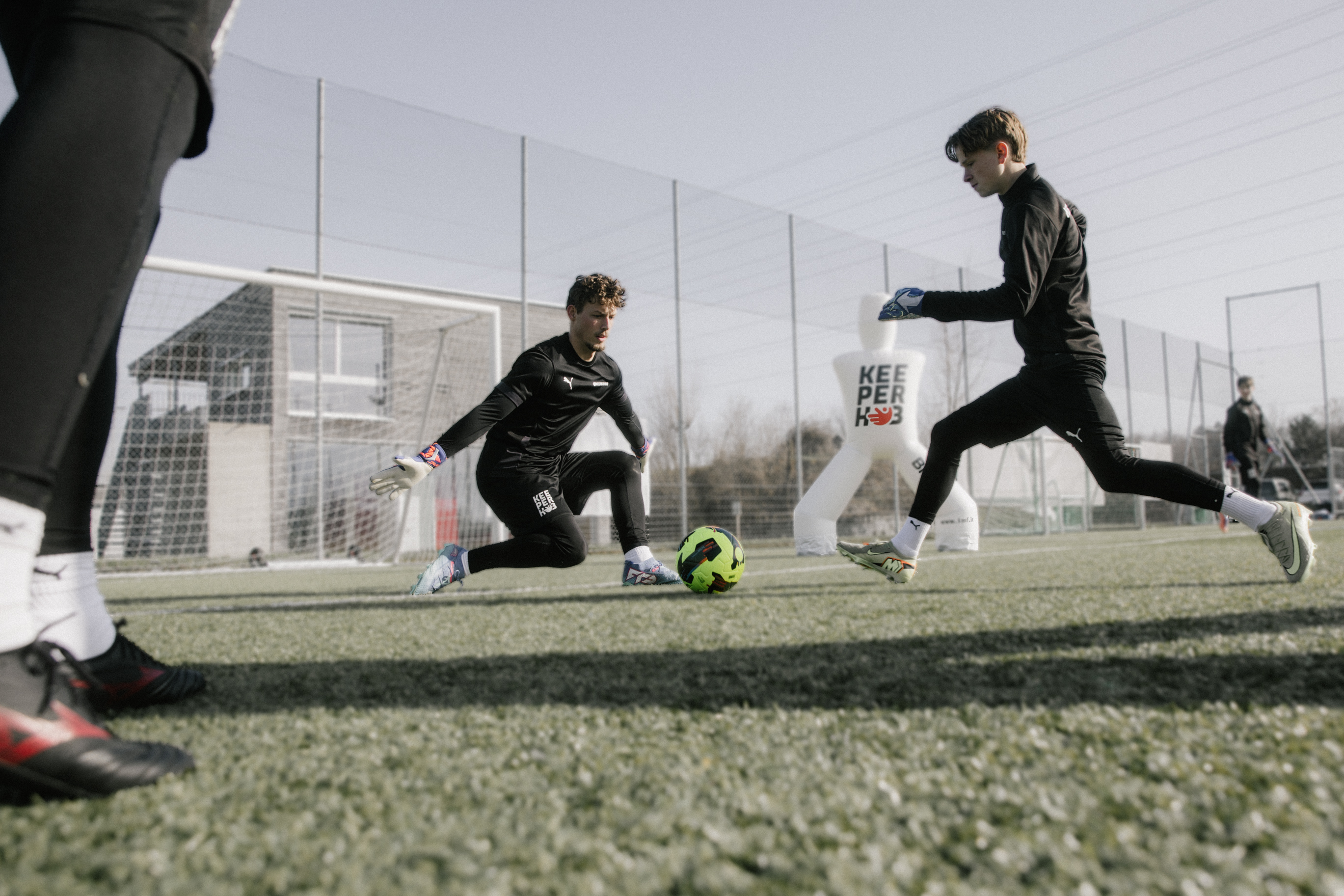
In this phase, the goalkeeper is fully integrated into team training. The focus is on applying technical, tactical and cognitive skills within real game situations. Training forms are game-real and connected to the team context. APPLY ensures that individual performance transfers effectively into match play.
05
Normalize
Recover, relax, and renew. Balance for body and mind.
At the end of every session, the goalkeeper returns to balance. The focus is on recovery and regeneration to restore physical and mental readiness. NORMALIZE ensures the goalkeeper is prepared for the next training session.
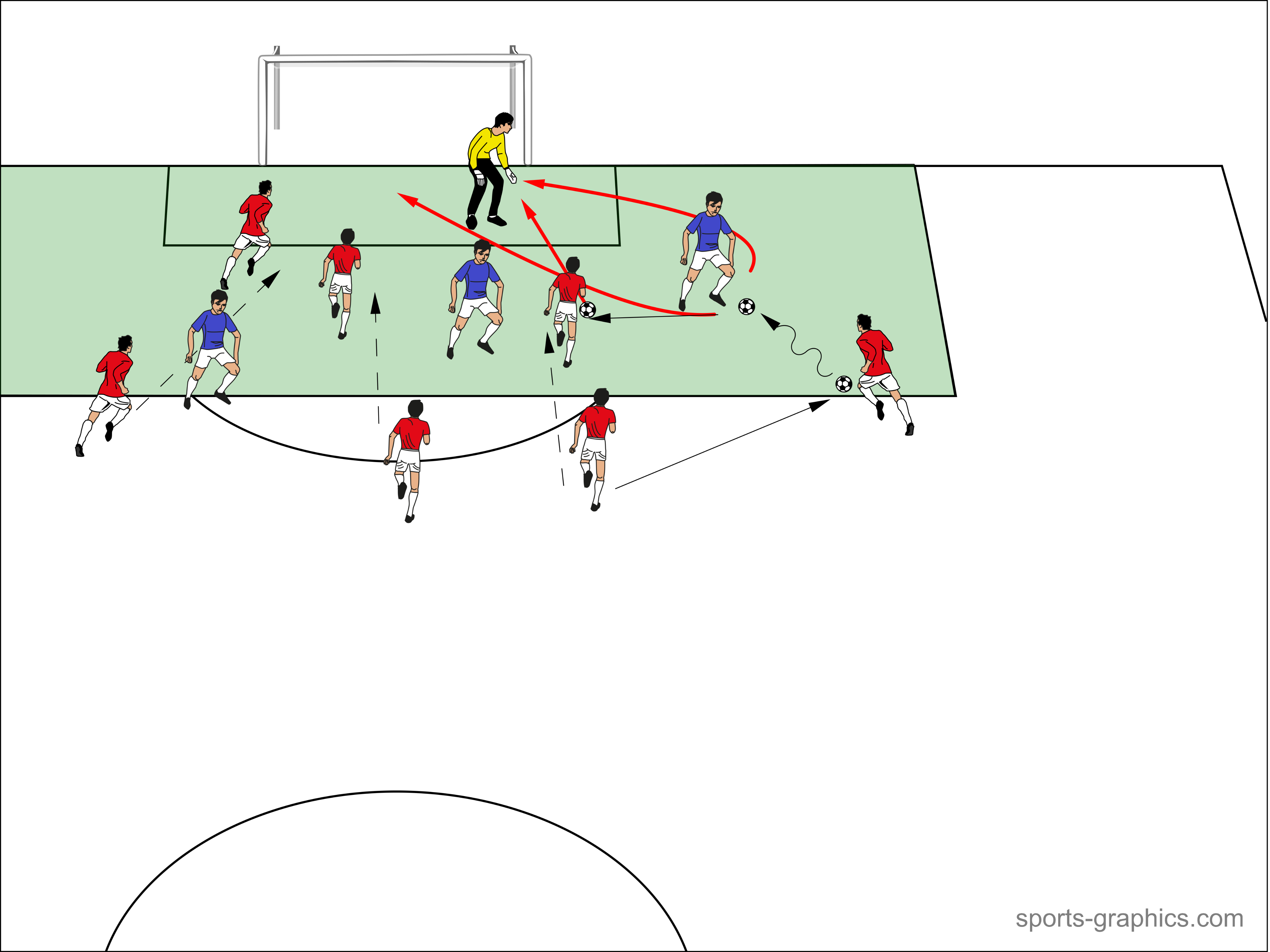
Inside Shot

This game situation describes actions in which the ball is played flat or at hip height from the side towards the penalty area. The ball is delivered either between the goalkeeper and the defensive line or between defensive lines, creating complex decision-making situations in terms of space defending.
The opposing attacking midfielder dribbles towards the defensive line, drawing the attention of the central defenders. A pass finds a striker inside the penalty area, who shoots directly at goal from close range. Alternatively, the striker passes to a supporting teammate, who also finishes from inside the penalty area.

Outside Shot
This game situation includes all shots on goal taken from outside the penalty area (see green zone).
The opposing attacking midfielder dribbles towards the defensive line. After feinting a pass, the player creates space and shoots from 18 to 20 metres. Alternatively, the midfielder passes to a teammate, who attempts a shot from outside the penalty area.
Cutback
This game situation describes actions in which the ball is played back precisely from the byline into the penalty area, either flat or semi-high. The relevant zone is inside the penalty area and extends laterally from the six-yard box to the outer lines of the penalty area (see green zone).
The objective of this situation is to create an immediate goal-scoring opportunity for an attacker through a first-time finish.
The opposing attacking midfielder plays a through ball behind the defensive line. A winger reaches the byline and plays a low pass back into the penalty area. An arriving attacker meets the pass and finishes directly at goal.
High Ball
This game situation includes all actions in which the ball is delivered into the penalty area on a high trajectory, either from open play or from a set piece. The objective is to create an immediate goal-scoring opportunity, either via a header or a direct volley.
An opposing winger draws the attention of the full-back. A supporting teammate makes an overlapping run and receives the ball. The player delivers a high cross into the penalty area, where an arriving striker prepares to head the ball. The goalkeeper decides whether to attack the ball or defend the resulting shot.
Low Cross
This game situation describes actions in which the ball is played flat or at hip height from the side into the penalty area. The ball is delivered either between the goalkeeper and the defensive line or between defensive lines, creating complex decisions related to space defending.
An opposing midfielder passes to a winger, who engages the full-back and delivers a low cross across the penalty area towards an arriving striker. The goalkeeper decides whether to intercept the cross before it reaches the attacker or prepare to defend the resulting shot.
Through Ball
This game situation describes actions in which the ball is played in behind the defensive line in order to gain space or create a goal-scoring opportunity. It also includes goalkeeper interventions outside the penalty area as part of active space defending.
The opposing central midfielder passes to the attacking midfielder, who plays a through ball between the central defender and full-back. A winger runs behind the defensive line. The goalkeeper assesses whether to intercept the ball or prepare for a one-on-one situation or direct shot.
Offensive
This game situation describes the goalkeeper’s offensive phase, in which he actively initiates and continues play. It includes all actions in possession, whether after a back pass, following the goalkeeper’s own intervention, or during restarts such as goal kicks and free kicks. Through precise distribution with the feet and targeted deliveries with the hands, such as rolling or throwing the ball, the goalkeeper shapes the build-up play.
After receiving a back pass, the goalkeeper scans the field and assesses the positions of teammates and opponents. As the passing lane to the central defender is blocked, the goalkeeper plays an accurate pass to the available full-back and supports the next phase of build-up play.
Mix of Game Situations
Game situations rarely occur in isolation. They are interconnected and develop dynamically. The CLEAN structure makes it possible to train these connections in a targeted way and replicate them under realistic match conditions. What matters is understanding the logic of the game and the goalkeeper's correct follow-up action.
The goalkeeper starts the build-up with a pass to the central defender (Offensive Phase). After losing possession, the opposing team plays a pass behind the defensive line (Through Ball). The goalkeeper adjusts their positioning and subsequently defends a shot from inside the penalty area (Inside Shot).
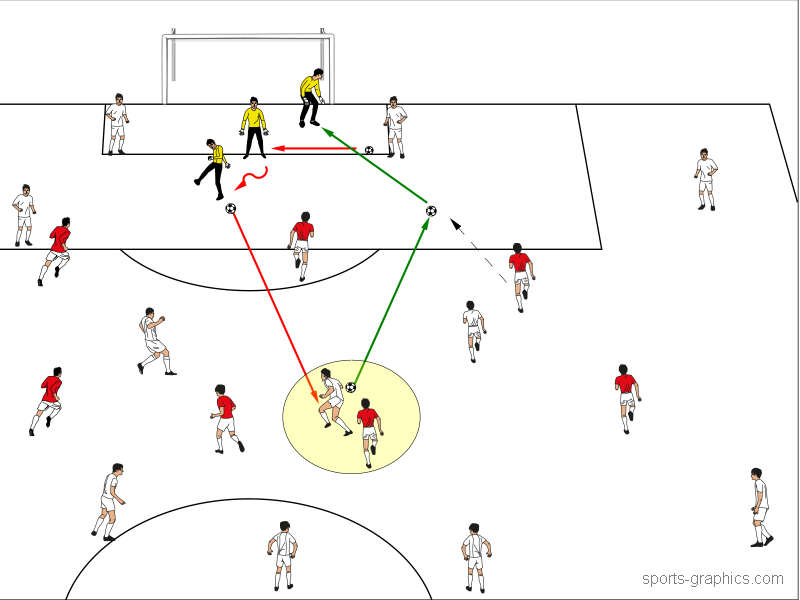
Game Situations
Goalkeeping can be divided into three key moments. In possession, the goalkeeper supports the build-up and actively contributes to the team’s offensive play. Without possession, the focus shifts to defending space and, ultimately, protecting the goal. To connect training with the game, we have defined seven key game situations. They form the foundation of our training content and ensure that every CLEAN session reflects the demands of real match situations.
Inside Shot
This game situation includes all shots taken from inside the penalty area, such as those following combinations, rebounds or passes. The goalkeeper must react to shots from close range, adjust their positioning and select the appropriate technique for each situation.

Outside Shot
This game situation includes all shots taken from outside the penalty area. The goalkeeper must assess the shooting distance, ball trajectory and potential deflections, adjusting their positioning and technique accordingly.
Cutback
This game situation involves low or mid-height passes played back from the byline into the penalty area. These passes create opportunities for attacking players to finish directly at goal.
High Ball
This game situation includes high balls delivered into the penalty area, either during open play or from set pieces. These deliveries can lead to headers or first-time finishes and require the goalkeeper to make decisions between defending the space and protecting the goal.
Low Cross
This game situation involves low or mid-height crosses played from wide areas into the penalty area. The ball travels between the goalkeeper and the defensive line or between defensive lines, requiring quick decisions when defending the space.
Through Ball
This game situation involves passes played behind the defensive line to create space or goalscoring opportunities. It also includes goalkeeper interventions outside the penalty area as part of active space defending.
Offensive
This game situation includes all actions when the goalkeeper is in possession of the ball, whether following a back pass, a save or a restart such as a goal kick or free kick. The goalkeeper actively initiates or continues play through accurate distribution with the feet or hands.
Mix of Game Situations
Several of the seven game situations can occur within a single sequence of play. The goalkeeper must continuously adapt their positioning, decisions and actions as the situation develops.
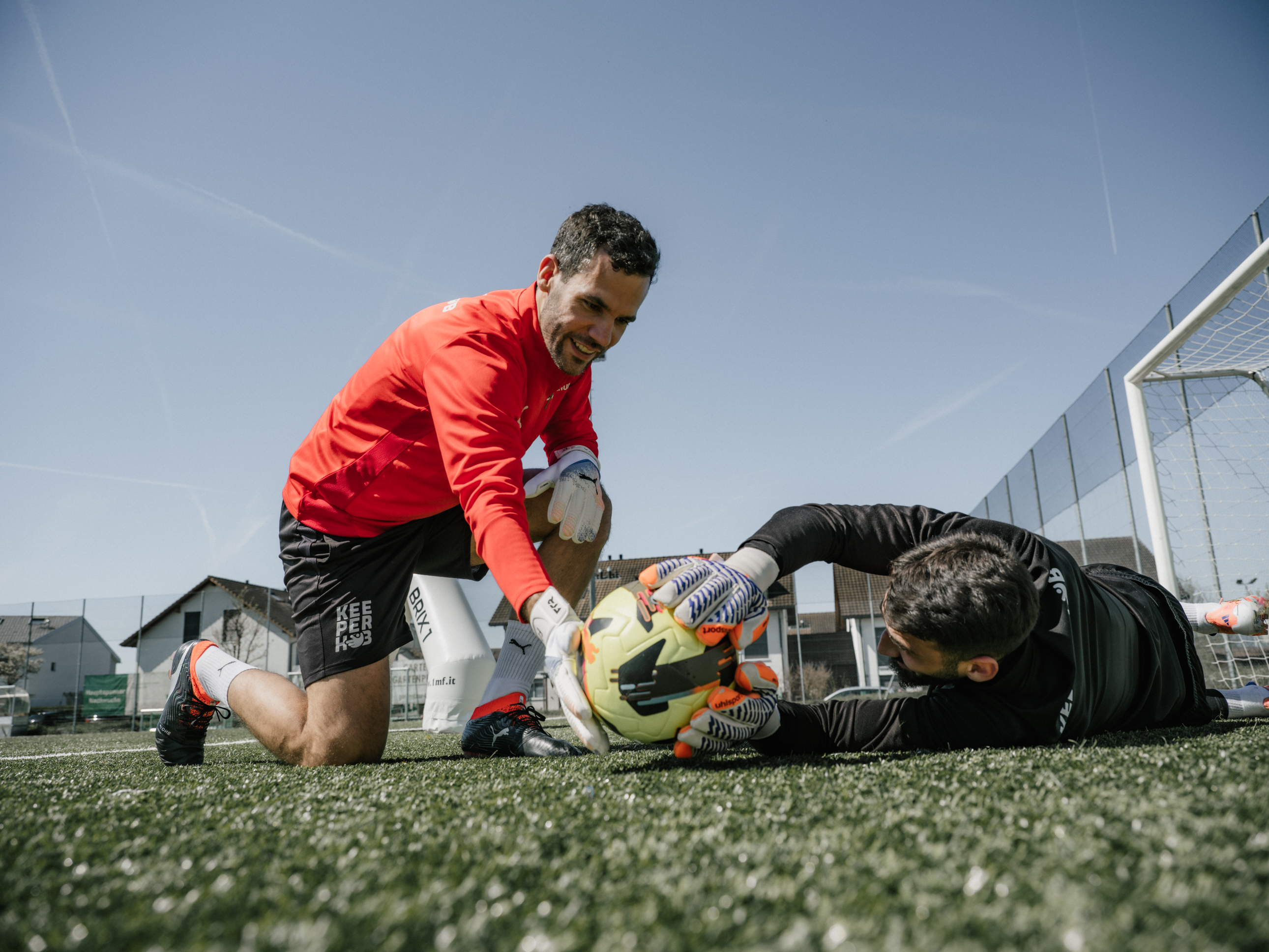
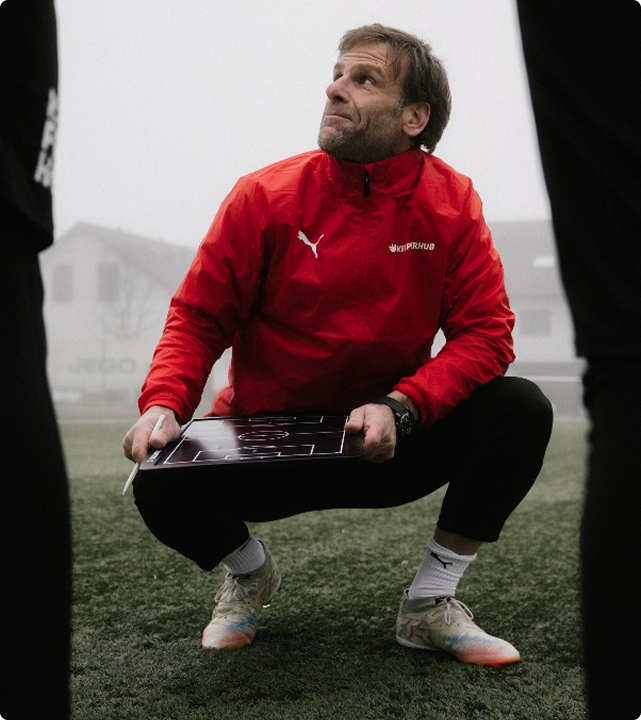
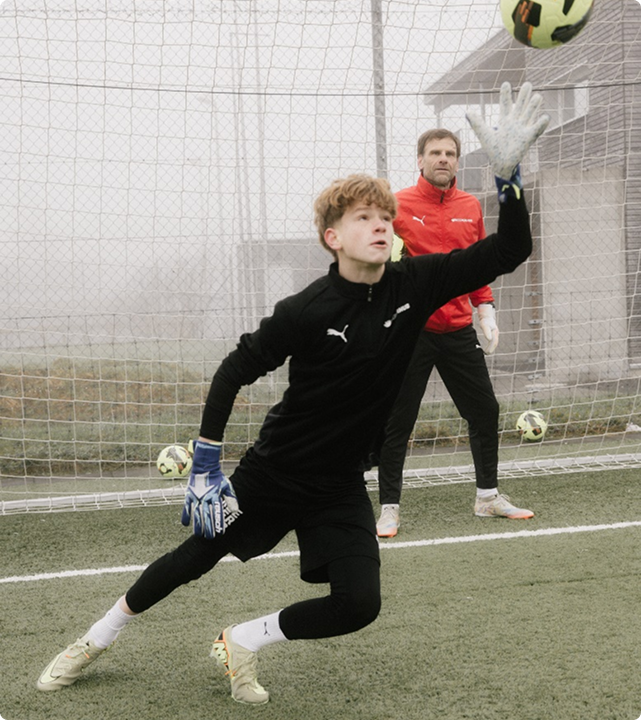
Human. Clear. Game-Realistic. CLEAN!
Our goalkeeper coaching is intentionally simple and conscious in its approach. Goalkeepers learn best when they feel safe, are encouraged to think, and are allowed to take responsibility.
We do not rely on constant corrections or rigid instructions. Instead, we create realistic game situations, ask good questions, and provide targeted impulses.
The coach provides orientation — the goalkeeper finds the solutions.
Learning begins with trust. Only when a player feels safe will they dare to make decisions, make mistakes, and continue developing.
For us, mistakes are not a problem but important learning signals. Our coaching is calm, honest, and supportive: without pressure, but with a clear stance.
Talk Less, Coach Better:
Goals Provide Direction
The focus is not the exercise itself, but the learning objective. Clear goals create focus, orientation, and motivation.
We use feedback deliberately: short, understandable, and given at the right moment. Not judgmental, but helpful.
Learning Through Experience
Observe. Understand. Give Guidance.
We observe closely, intervene deliberately, and allow the goalkeeper to act. Often, a good question is more effective than a long explanation.
Our guiding principle:
Better to let them do it correctly than to over-explain everything.
Development Takes Time:
Not Linear, but Sustainable
Goalkeepers develop in phases — with progress and setbacks.
Our task as coaches is to create the right conditions:
• game-realistic
• variable
• authentic
This is how real, sustainable development emerges.
The Role of the Coach:
A Guide, Not a Commander
The modern goalkeeper coach accompanies, supports, and consciously steps back when needed.
The goal is a goalkeeper who thinks independently, makes their own decisions, and takes responsibility.
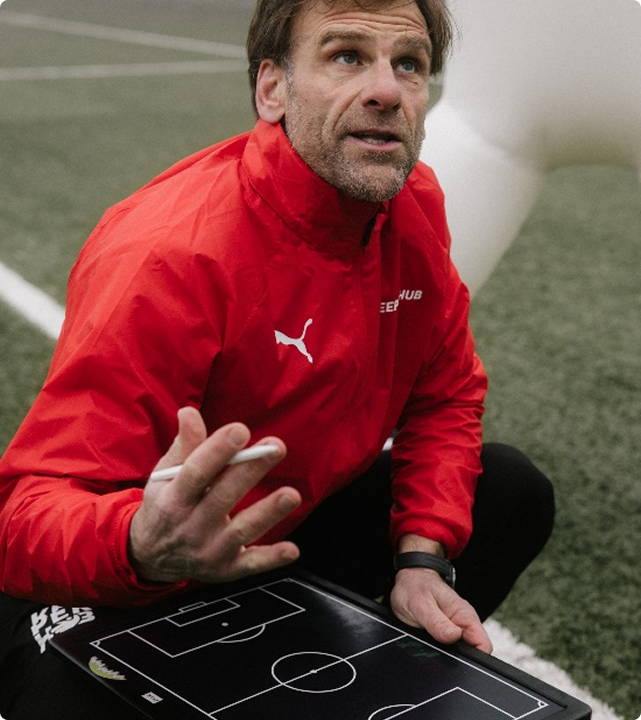
Human. Clear. Game-Realistic. CLEAN!
Our goalkeeper coaching is intentionally simple and conscious in its approach. Goalkeepers learn best when they feel safe, are encouraged to think, and are allowed to take responsibility.
We do not rely on constant corrections or rigid instructions. Instead, we create realistic game situations, ask good questions, and provide targeted impulses.
The coach provides orientation — the goalkeeper finds the solutions.
Trust as the Foundation:
Relationship Before Content
Learning begins with trust.
Only when a player feels safe will they dare to make decisions, make mistakes, and continue developing.
For us, mistakes are not a problem but rather, they are important learning signals.
Our coaching is calm, honest, and supportive: without pressure, but with a clear stance.
Talk Less, Coach Better:
Goals Provide Direction
The focus is not the exercise itself, but the learning objective. Clear goals create focus, orientation, and motivation.
We use feedback deliberately: short, understandable, and given at the right moment.
Not judgmental, but helpful.
Learning Through Experience
Observe. Understand. Give Guidance.
We observe closely, intervene deliberately, and allow the goalkeeper to act. Often, a good question is more effective than a long explanation.
Our guiding principle:
Better to let them do it correctly than to over-explain everything.
Development Takes Time:
Not Linear, but Sustainable
Goalkeepers develop in phases — with progress and setbacks.
Our task as coaches is to create the right conditions:
• game-realistic
• variable
• authentic
This is how real, sustainable development emerges.
The Role of the Coach:
A Guide, Not a Commander
The modern goalkeeper coach accompanies, supports, and consciously steps back when needed.
The goal is a goalkeeper who thinks independently, makes their own decisions, and takes responsibility.